Trending

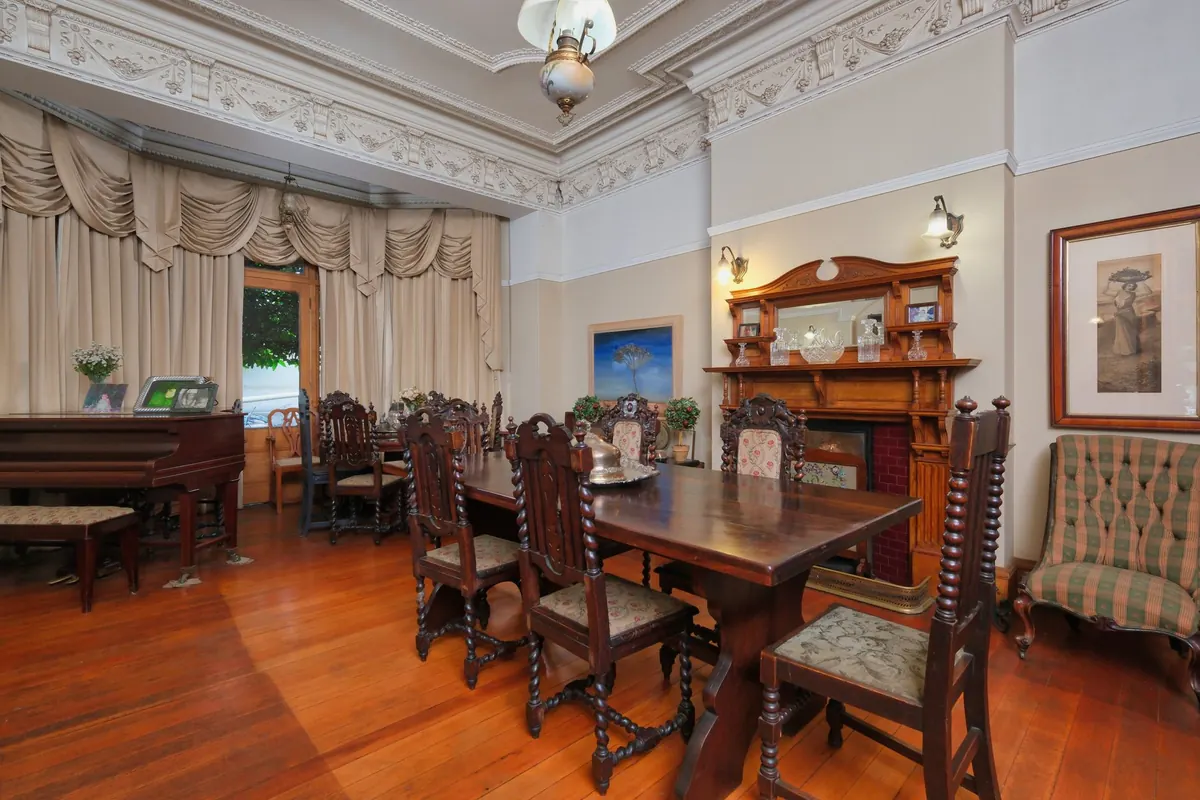
A Victorian terrace bedroom has a lot going for it: high ceilings, deep skirting, sash windows that actually open. What it rarely has is quiet. Party walls are solid brick with no cavity, floorboards have had a century and more to shrink apart, and every chimney flue on the street is a speaking tube into your room. The good news is that most of the noise arriving in a terrace bedroom travels through a handful of predictable weak points. Deal with those and you can make a real difference without touching the cornice.
Before you buy anything, spend a week paying attention. Stand in the room with the door shut and work out what you are hearing. Voices and television are airborne noise, and airborne noise is usually about gaps. Footsteps, doors and drawers are impact noise, which travels through the structure and is harder to stop. Low bass rumble with no speech at all usually means the masonry itself is passing sound, and that will need mass rather than sealant.
Then walk the room and put your ear close to things: under the skirting, along the chimney breast, around the window reveal. In a terrace, sound also arrives sideways through the party wall, and your floor joists run into that wall, so vibration carries along them. Rooms that share a chimney breast with next door are often the worst offenders in the house.
This is the cheapest work you will do, and often the most effective. Any gap that lets air through lets sound through. Work around the room with a tube of acoustic sealant, which stays flexible as the building moves, rather than decorator's caulk, which cracks.
You will often hear the difference the same evening.
An original sash is a wonderful thing with two or three millimetres of draught all the way round it. Brush or wiper seals in the staff beads and meeting rail cut that down for very little money. For street noise, secondary glazing is the usual answer: a slim independent frame fixed inside the reveal, with a gap of at least 100mm between the old glass and the new. That air gap does the work. Ask for laminated glass if the budget allows, because the interlayer damps vibration better than ordinary glass of the same thickness, and make sure the new frame seals properly against the reveal rather than floating in the opening.
Heavy lined curtains and well-fitted shutters help with higher frequencies. Replacing original sashes with modern double glazing rarely delivers what people expect, and in a conservation area or listed building you will need consent first.
Sound dislikes mass and adores gaps. The aim is to add weight near the wall and break the rigid connection between the new surface and the old one, without building a box in your bedroom.
Direct-fixed acoustic plasterboard, bonded to the wall with acoustic sealant, is the least invasive option and gives a modest improvement. A better result comes from a stud frame set slightly away from the wall, packed with mineral wool and faced with two layers of acoustic plasterboard. Resilient bars achieve something similar with less depth. Either way you will lose 60–80mm of room width, so measure against the bed and the wardrobe before committing.
You do not have to lose it. Take the new wall up to just below the moulding, then have a plasterer run a matching profile across the new face so the run looks continuous; copies can be cast from the existing profile. Once painted, the join disappears and the original above it is untouched. In a narrow room it may be better to treat only the stretch of wall behind the bed or beside the chimney breast.
Old skirting can be removed carefully, labelled and refitted in front of the new wall, or replaced with a matching profile fixed to the new face. Seal the top and bottom edges either way. And avoid screwing the new wall down to the floorboards: the less rigidly it touches the structure, the less vibration it passes along.
Sound crosses between terraced houses through the structure as well as the walls. Floorboard gaps let air and noise through, and a bead of sealant between the boards is a quick win. If you are lifting boards for another reason, mineral wool between the joists is inexpensive and worthwhile.
Impact noise from above is the awkward one. Resilient bars and acoustic plasterboard on the ceiling work, but they cost head height and put the cornice back in play, so weigh that up carefully. A good underlay and a thick carpet will not keep noise out, but they noticeably reduce what you send next door
Photo: Alexander F Ungerer / Pexels